
The central government is on track to meet its fiscal deficit target of 6.4 per cent of the GDP for 2022-23 on the back of strong growth in revenue collections, the World Bank said in its India Development Update on Tuesday. High nominal GDP growth in the first quarter supported strong growth in revenue collection, especially Goods and Services Tax (GST), despite tax cuts on fuel. Notwithstanding an increase in spending due to expanded fertilizer subsidies and food subsidies for vulnerable households in response to the commodity price shock, the government is on track to meet its FY22/23 fiscal deficit target of 6.4 per cent of GDP and the general government deficit is projected to decline to 9.6 per cent from 10.3 per cent in FY21/22 and 13.3 per cent in FY20/21.
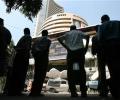
The 30-share Sensex ended up 12 points at 28,517 while the 50-share Nifty ended nearly unchanged at 8,660.

Nupur was able to successfully build a prototype of a biomass briquette, an alternative fuel from waste materials.

Human Development -- a measure of a nation's health, education, and average income -- has declined for two years in a row.

Govt's move will facilitate entry of global giants such as Total SA of France, Saudi Arabia's Aramco, BP Plc of the UK, and Trafigura's downstream arm Puma Energy.
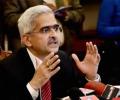
Heightened geopolitical uncertainties will lead the Reserve Bank's rate-setting panel to opt for a status quo at the next week's meeting, Axis Bank's chief economist Saugata Bhattacharya said on Monday. Bhattacharya said he had earlier expected a tightening action at the policy meet scheduled for April 6-8 but the increased uncertainties on the geopolitical front due to the Russian invasion of Ukraine and its impact on commodity prices makes him now think that RBI will defer such an action. He said the central bank's Monetary Policy Committee (MPC) may hike rates in the second half of FY23 by up to 0.50 per cent.
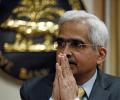
Reserve Bank Governor Shaktikanta Das on Wednesday ruled out upside risks to the 5.3 per cent inflation forecast for the current fiscal, saying the recent cut in excise duty on diesel and petrol as well as better management of supply-side issues on the food front have contained inflationary expectations. These measures are significantly positive for inflation management, he said. After months of calls for reducing taxes on fuels, the government, last week, cut the excise duty on diesel and petrol by Rs 10 and Rs 5 per litre, respectively.

After bumbling for years since 2014, the Modi government seems to believe that massive government expenditure will lead us to prosperity supported by 'seat-of-the-pants' decision-making, observes Debashis Basu.

Home Minister Rajnath Singh said that the decision could cost the government roughly Rs 15,000 crore.

Retail inflation hit an eight-month high of 6.07 per cent in February, remaining above the RBI's comfort level for the second month in a row, while wholesale price-based inflation soared to 13.11 per cent on account of hardening of crude oil and non-food item prices, government data showed on Monday. The previous high for retail inflation was 6.26 per cent in June 2021. The consumer price index (CPI) based retail inflation, which is taken into account by the Reserve Bank of India (RBI) while deciding its monetary policy, rose mainly because of costlier food items, as per the data released by the National Statistical Office (NSO).

MEA xpokesperson Arindam Bagchi said India continues to closely follow the developments in Sri Lanka and that it is aware of the many challenges that the country and its people have been facing.

The RBI's mistake may have been in interpreting its mandate to maintain retail inflation at 4%, with 2% leeway in either direction, as being a mandate that permitted it to do nothing even when inflation was at or near the upper bound of 6%, observes T N Ninan.

The retail inflation rate breached the 6 per cent upper tolerance limit of the RBI for the first time in seven months in January, while the wholesale price index stayed in double-digits for the 10th month in a row, showed two sets of data released by the government on Monday. Retail inflation, the key input for the RBI while reviewing the repo rate every two months, soared during the month mainly because of a spike in certain food items. The previous high for retail inflation was 6.26 per cent in June 2021.

A joint forum of central trade unions has given a call for a nationwide strike on March 28 and 29 to protest against the government policies affecting workers, farmers, and people.
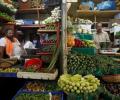
The wholesale price-based inflation eased marginally to 12.07 per cent in June as crude oil and food items witnessed some softening in prices. However, WPI inflation remained in double digit for the third consecutive month in June, mainly due to a low base of last year. WPI inflation was (-) 1.81 per cent, in June 2020. Snapping the five straight months of uptick, the wholesale price index (WPI)-based inflation in June softened as prices of food articles and crude oil eased, even though manufactured products hardened.
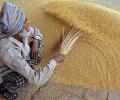
India has banned wheat exports with immediate effect as part of measures to control rising domestic prices, according to official notification. However, the export shipments for which irrevocable letters of credit (LoC) have been issued on or before the date of this notification will be allowed, the Directorate General of Foreign Trade (DGFT) said in a notification dated May 13. "The export policy of wheat ... is prohibited with immediate effect...," the DGFT said. It also clarified that wheat exports will be allowed on the basis of permission granted by the Government of India to other countries to meet their food security needs and based on the request of their governments.
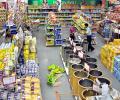
Moody's Investors Service has warned that India, along with the Philippines, Thailand, and Vietnam are highly vulnerable to volatile food and energy prices in the Asia-Pacific region as the Russia-Ukraine conflict continues to disrupt supplies and raise the cost of agricultural products, especially cereals and vegetable oils, as well as fertilizers and other agricultural inputs. This is so because these countries have a higher weighting of energy and food prices in their consumer price index (CPI) baskets, Moody's said in its report released on Tuesday. The weighting of energy and food in overall Indian CPI stands at over 55 per cent.
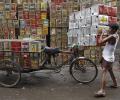
High inflation print is the price that the Reserve Bank of India (RBI) will have to pay to nurse a fragile growth back, say economists. Wholesale Price Index-based inflation rose to a record high of 12.94 per cent in May, aided by low base effect, but also because of higher fuel and commodity prices. Retail inflation, too, surprised by rising to 6.30 per cent, while the core inflation, which is the non-food and non-fuel component, rose to an 83-month high of 6.55 per cent. These numbers are much above RBI's upper limit of 6 per cent inflation target, but there is very little that the RBI can do at this moment.

Amid fears of a third wave of coronavirus pandemic and hardening of retail inflation, the Reserve Bank is likely to maintain status quo on interest rate and watch the developing macroeconomic situation for some more time before taking any decisive action on monetary policy. The RBI is scheduled to announce its bi-monthly monetary policy review on August 6 at the end of the three-day meeting -- August 4-6 -- of the Monetary Policy Committee (MPC). The RBI Governor-headed six-member MPC decides on the key policy rates.

When the Tatas re-boarded Air India on January 27 last year, the price of aviation turbine fuel was at over Rs 80,000 per kilolitre. Rupee was trading at around Rs 74 to a US dollar. The Omicron variant of Covid-19 was in prevalence - barely a week earlier, India had reported over 340,000 cases on a single day. Seven-day home quarantine of international travellers was the norm.

'The government will take proactive steps to see that their participation in the equity market, especially in PSU stocks, is rewarding.'

The report stated the 2013 land Act was a step forward.

'What was predictable, but entirely missed by Modi's strident critics, is that the excessive and intemperate demonisation of Modi allowed him to assume his own metaphor -- the underdog, the martyr, the marginalised,' says Dr Aseem Shukla.

The Sensex came under fag-end selling pressure to close in the red for the sixth straight session on Friday as risk-off sentiment prevailed amid unabated selling by foreign institutional investors and concerns over inflation. The 30-share BSE benchmark pared all intra-day gains and declined 136.69 points or 0.26 per cent to end at 52,793.62. During the day, it had rallied 855.4 points or 1.61 per cent to 53,785.71. On similar lines, the broader NSE Nifty dipped 25.85 points or 0.16 per cent to settle at 15,782.15.

Thousands of Inter University Students' Federation (IUSF) students were seen sloganeering outside the Prime Minister's Residence in Wijerama Mawatha.

Spiralling prices pinched the pocket of consumer as edible oil, fuel and many other commodities turned dearer this year amid pandemic-induced disruptions but the inflationary pressure is anticipated to ease, though marginally, in the coming months. As consumers, at retail as well as wholesale levels, are willy-nilly learning to live with the new normal of curbs to contain the spread of coronavirus infections, experts are of the view that elevated inflation is likely to stay longer. After dealing with the devastating blows from the second COVID wave, especially during the April-June period, the economy is well on the revival path but the emergence of Omicron might unsettle the recovery trajectory in the short term.

The government may provide for targeted fiscal incentives and allocation of funds for promotion of green hydrogen in the country in Union Budget 2022-23, which is slated to be unveiled in Parliament on Tuesday. The government launched National Hydrogen Mission in 2021. Earlier this month, Power and New & Renewable Energy Minister R K Singh had indicated that a green hydrogen policy will be unveiled in February which would feature many incentives to boost green hydrogen in the country. "While 2021 saw the launch of National Hydrogen Mission, it is likely that the Budget may provide for targeted fiscal incentives for R&D in green hydrogen segment, creation of domestic supply chain for hydrogen and reduce customs duties on electrolysers to boost green hydrogen production," says Venkatesh Raman Prasad, Partner, J Sagar Associates (JSA).

Failure to reinstate salary even two years after the drastic cuts has landed the airline industry in a massive industrial relation crisis. While employees of Air India had organised a strike back in 2011, it is for the first time that private airlines are facing serious stress related to workers. IndiGo witnessed two of them, back to back. In the first instance, around 50 per cent of the IndiGo flights were delayed as a large number of crew members went on mass sick leave, apparently to participate in a rival airline's walk-in job interview.

India's electric mobility goal, which has so far been riding on two wheels, is all set to graduate to four wheels. At least, the journey has begun. Hyundai Motor India said it would invest Rs 4,000 crore till 2028 to launch half-a-dozen electric vehicles (EVs) in India. It would eventually straddle premium and mass segments. The first of these - the electrified version of an internal combustion engine (ICE)-powered model - will go on sale as early as next year.

The wholesale price-based inflation eased to 10.66 per cent in September, helped by moderating food prices even as crude petroleum witnessed a spike. WPI inflation remained in double-digit for the sixth consecutive month. In August, it was 11.39 per cent. In September 2020, inflation was 1.32 per cent. "The high rate of inflation in September 2021 is primarily due to rise in prices of mineral oils, basic metals, non-food articles, food products, crude petroleum & natural gas, chemicals and chemical products etc. as compared the corresponding month of the previous year," the commerce and industry ministry said in a statement.

China on Tuesday announced a major policy change for its crisis-ridden power sector by allowing coal-fired power plants to charge their industrial and commercial customers market-driven prices. The National Development and Reform Commission (NDRC) of China said the electricity generated by coal-fired plants would discover price in market trading "in an orderly manner" from October 15. This is being done to pass on the high costs of coal and is being held up as the boldest reform in the Chinese power sector.

The NFUP smacks of an extremist version of masochism. It's tantamount to: You, there, c'mon clobber me, but if you leave me alive I'll disembowel you!

'This is a historical moment in the political history of Sri Lanka.' 'You can see the amount of pressure that is coming from the people because nobody addressed the policy blunders, multiple corruption charges and huge scandals.'

Technical Advisory Committee was for status quo in policy rate on little hope of government action.

Sri Lanka has also imposed a police curfew in Western Province for six hours.

Only a few thousand chargers dot the Indian landscape, some in working condition, others not, with some held hostage to the power supply vagaries of local utilities, reports S Dinakar.

'That is the one headline the world is reading about India this week, and it is a potentially damaging story...' 'I don't think a panic mentality has set in, but this story is one that investors and market watchers are absolutely seized with.'

The Delhi Assembly on Friday suspended Bharatiya Janata Party MLA Jitender Mahajan from its one-day special session and also marshalled out BJP legislators Anil Bajpai and Mohan Singh Bisht for allegedly disrupting the proceedings of the House.
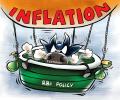
'While intensification of fuel prices and broad-based domestic cost pass-through pressures is a downside risk, core inflation is expected to strengthen further as demand recovers to pre-Covid levels,' the ministry said on Friday.
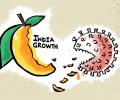
The economic growth may have slowed to 3.5 per cent in fourth quarter of 2021-22 from 5.4 per cent in the previous three-month period due to the impact of higher commodity prices on margins, decline in wheat yields and on higher base, Icra Ratings said on Monday. The agency said the hiccups in the recovery of the contact-intensive services attributable to the third wave of Covid-19 in the country may have also affected the economic growth in the quarter. Even the gross value added (GVA) at basic prices (at constant 2011-12 prices) in Q4 FY2022 seems to have eased to 2.7 per cent from 4.7 per cent in Q3 FY2022, it said.
